City Marketing Explained: Strategies, Examples and Trends for 2026
Not long ago, city marketing was mostly about tourism. A nice logo, a catchy slogan, and some pretty photos to convince people to visit. But from 2026 on, that’s not enough.
Cities aren’t only trying to attract tourists anymore. They’re also trying to attract new residents, remote workers, students, startups, big companies, and events. And they’re doing all of this while trying to keep the city a great place to live for the people who are already there.
City marketing aims at making people feel something about the city, building trust, and showing clearly what makes the place worth choosing. The most interesting fact about this is that practically every city around the world, no matter the size, is trying to adapt strategies and tactics to succeed on this discipline.
In this guide, we’ll explain what city marketing really means, how it’s different from city branding, what cities should focus on from 2026 on, and what trends will shape city marketing until 2030.
What is city marketing and why does it matter?
City marketing is the long-term process of shaping, communicating, and managing how a city is perceived by different audiences. Its purpose is to influence decisions by encouraging people to visit, invest, study, work, live, or host events in a city rather than choosing another destination.
Unlike traditional tourism marketing, city marketing has a much broader focus. It combines place branding, communication, economic development, and stakeholder collaboration to build a strong and consistent city identity. By aligning governments, businesses, educational institutions, tourism organisations, and local communities around a shared vision, cities can communicate their strengths more effectively and create a clear position in an increasingly competitive landscape.
City marketing today goes far beyond attracting visitors. Modern strategies support a wide range of objectives, including:
- Attracting startups and corporate headquarters to strengthen the local economy
- Drawing students and researchers to build knowledge clusters
- Securing major events like UEFA EURO 2028
- Retaining and attracting new residents in an era of remote work mobility
- Improving global rankings such as the Global Power City Index
People often form an opinion about a city long before they experience it in person. Whether someone is planning a trip, considering a move, exploring investment opportunities, or deciding where to study, their first impression is usually shaped online. Search engines, social media, news coverage, reviews, and digital content all influence how a city is perceived before any direct interaction takes place.
As competition between cities continues to grow, a structured city marketing strategy has become more important than ever. Cities now compete not only with neighbouring destinations but also with locations around the world for visitors, investment, talent, businesses, and major events. By actively managing their identity and reputation, cities can build trust, communicate their unique strengths, and create lasting economic and social value for both residents and external audiences.
When city marketing is effective, the impact is very real. Cities see more visitor spending, a stronger tax base, new jobs, and, most importantly, a better quality of life for the people who live there. At its best, city marketing stops being just a communication effort and becomes a tool for long-term urban growth that benefits the whole community.
From 2026 onward, this role becomes even more important because cities are competing harder than ever. People can move more freely thanks to remote work and flexible lifestyles. This means cities are now something to choose, not something you’re tied to. At the same time, talent has become one of the main engines of economic growth. Cities that manage to attract skilled people often end up attracting startups, innovative companies, and investment as well. Add to that the speed at which reputations spread today through social media, reviews, videos, and constant online conversation. City marketing is no longer about “selling” a place. It’s about building trust, earning attention, and creating a reputation that holds up over time.
City Marketing vs. City Branding vs. Destination Marketing
These terms often get confused, but the distinctions matter for strategy and budgeting.
- City marketing is the ongoing activity of promoting that brand to target audiences through campaigns, events, partnerships, and communications. It answers: “How do we reach people and influence their decisions?”
- City branding is the strategic foundation that defines the city’s identity, values, and unique positioning. It answers the question: “What does this city stand for?”. Also known as place branding is the strategic process of building and managing the identity of a geographic location.
- Destination marketing typically focuses specifically on tourism promotion, often at a regional or national level. It’s a subset of the broader place marketing discipline.
Which problems can city marketing solve?
A city can offer strong infrastructure, attractive public spaces, business opportunities, and a rich cultural life. Yet people may still overlook it when choosing where to visit, invest, work, or live. The reason is often simple: the city has not communicated its strengths clearly enough.
City marketing helps shape how a city is seen by residents and external audiences. It connects identity, communication, tourism, investment promotion, and reputation management in one clear direction. When done well, it helps a city attract the right people, strengthen civic pride, and build a more consistent image.
So, which problems can city marketing solve? The following five challenges show where a clear city marketing strategy can create the most value.
1. Lack of a clear city identity
City identity is the unique character of a city, shaped by its culture, people, values, history, and way of life. It reflects both how a city sees itself and how others perceive it. A clear city identity forms the foundation of effective city marketing because it helps cities communicate consistently and distinguish themselves from competing destinations.
The problem
Many cities struggle to define a clear identity and strategic position. Without a well-defined identity, a city can appear generic, making it harder to attract visitors, investors, businesses, and new residents. It can also weaken civic pride, since residents may find it difficult to explain what makes their city unique.
When a city’s value proposition is unclear, it often points to a wider branding and positioning challenge. Without a consistent story, communication becomes fragmented. This limits recognition and makes it harder for audiences to understand what the city represents.
How city marketing helps
City marketing begins with place branding. This process identifies a city’s unique DNA, values, strengths, and personality. Through research, storytelling, and a consistent visual identity, cities can develop a clear narrative that reflects who they are and what they stand for.
A strong city identity helps to:
- Differentiate the city from competing destinations.
- Create emotional connections with target audiences.
- Provide a consistent foundation for communication and marketing activities.
A clear identity also strengthens every other city marketing initiative. It gives campaigns a shared direction and creates a strong starting point for long-term positioning.
2. Declining tourism or seasonal dependency
Declining tourism or seasonal dependency occurs when a city experiences lower visitor numbers or relies heavily on tourism during specific periods of the year. This can lead to fluctuating revenue, underused infrastructure, and reduced economic activity outside peak seasons. A more balanced visitor economy depends on attracting different audiences throughout the year.
The problem
Many cities depend on tourism as an important source of economic activity. At the same time, they face challenges such as seasonal demand, dependence on a limited number of attractions, and perceptions related to safety or accessibility. Questions about value can also influence travel decisions.
Travel preferences continue to change as visitors look for more personal experiences and greater flexibility. Cities that adapt their positioning can respond to these changes and strengthen their tourism performance throughout the year.
How city marketing helps
Strategic city marketing enables cities to diversify their tourism offering and reach new audiences. Rather than focusing only on well-known attractions, cities can promote a wider range of experiences that appeal to different visitor segments.
Effective city marketing strategies include:
- Promoting culture, gastronomy, events, nature, and innovation.
- Reaching new traveller segments through targeted digital advertising.
- Repositioning the city beyond familiar stereotypes.
Content marketing, social media, SEO, and paid campaigns can increase the visibility of lesser-known experiences. This creates more balanced visitor flows and helps cities attract visitors beyond the busiest tourism periods.
3. Difficulty attracting investment and talent
Cities compete for businesses, skilled professionals, entrepreneurs, digital nomads, and international events. A city may offer strong infrastructure and a high quality of life, yet still struggle to attract attention. Clear positioning helps investors and professionals understand why the city deserves consideration.
The problem
Many cities have strong economic foundations but limited visibility. Their business opportunities, local talent, and innovation networks may remain relatively unknown outside the region. Competing cities often gain more attention because they communicate their strengths with greater consistency.
An unclear value proposition can make it harder for companies and professionals to compare opportunities. As a result, cities may miss investments or talent that would support local economic growth.
How city marketing helps
City marketing supports economic development by communicating why a city is an attractive place to live, work, and invest. A clear message helps the city reach relevant audiences and present its economic strengths in a direct way.
Effective city marketing strategies include:
- Promoting innovation ecosystems and supporting infrastructure.
- Highlighting quality of life and affordability.
- Communicating local and international connectivity.
- Creating targeted campaigns for investors, entrepreneurs, and skilled professionals.
Consistent communication can shift a city from being relatively unknown to being recognised as a place with real opportunities. This stronger position supports investment attraction and talent recruitment.
4. Low citizen engagement and civic pride
A successful city identity depends on how residents feel about the place they call home. Civic pride reflects the connection people have with their city, local community, and shared identity. Residents who feel connected are more likely to participate in local initiatives and speak positively about their city.
The problem
When residents feel disconnected, participation in local projects can decline. Support for urban development plans may also weaken, especially when people feel that their experiences are missing from the city’s wider story.
Local opinions influence external perception as well. Conversations, online reviews, and social media posts all shape how visitors and potential residents view a city. A strong internal connection therefore supports a stronger external reputation.
How city marketing helps
City marketing also focuses on internal communication. Campaigns that celebrate local stories, shared achievements, and cultural identity can strengthen the relationship between residents and their city.
City marketing can help cities:
- Strengthen civic pride and a sense of belonging.
- Encourage participation in local initiatives.
- Share local achievements with a wider audience.
- Turn residents into authentic city ambassadors.
When residents recognise themselves in the city’s story, they are more likely to support and share it. Their involvement gives city communication greater credibility and a more human voice.
5. Outdated or negative public perception
A city’s reputation influences how people think and make decisions about visiting, investing, or relocating. Public perception develops through personal experiences, media coverage, online content, and conversations. Even when a city changes, its reputation may take more time to reflect that progress.
The problem
Some cities continue to be associated with older perceptions related to safety, economic decline, infrastructure, or past social challenges. Improvements may already be visible locally, while external audiences still rely on older stories or limited information.
These perceptions can influence travel plans and business decisions. They can also affect how professionals assess the city as a place to build a career or create a new life.
How city marketing helps
City marketing helps cities actively shape their reputation. Through consistent communication and authentic storytelling, cities can present a more accurate picture of who they are today and where they are heading.
Effective reputation strategies include:
- Showcasing transformation and recent developments.
- Correcting outdated misconceptions with clear information.
- Sharing stories from residents and local organisations.
- Building a consistent narrative across digital channels and media.
Modern city marketing focuses on real people, visible progress, and meaningful opportunities. This approach creates a more credible picture than generic slogans or polished campaigns without substance.
The main target groups for city marketing
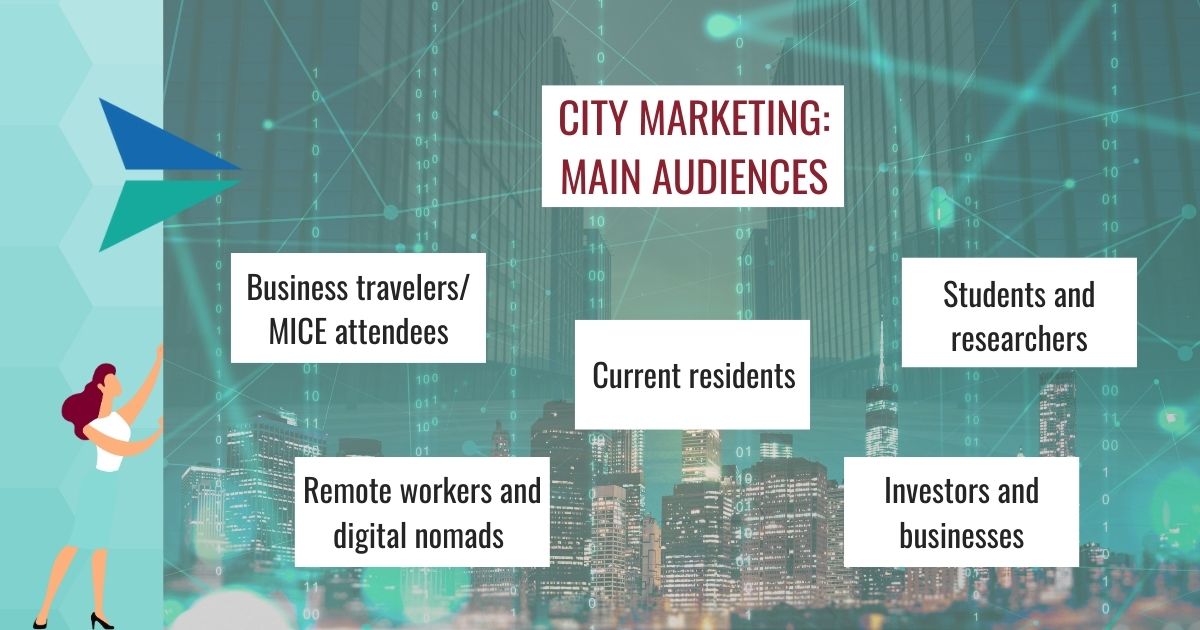
Leisure tourists remain a core audience, but they’re just the beginning. Consider the full spectrum of people a city needs to attract and retain:
- Business travelers and MICE attendees (meetings, incentives, conferences, exhibitions): This group is usually interested in high-quality venues and accommodations, efficient transportation, reliable infrastructure, and appealing leisure or networking opportunities.
- Students and researchers: This group usually focus on cities with reputable institutions, access to resources and funding, a collaborative academic environment, affordable living, and a vibrant cultural and intellectual scene.
- Remote workers and digital nomads: This group usually seeks cities with affordable cost of living, comfortable workspaces, a strong community, safety, and a good quality of life with lifestyle and travel opportunities.
- Investors and businesses: This group is usually interested in cities with a stable economy, favorable regulations, access to talent, strong infrastructure, market opportunities, and a supportive business ecosystem.
- Current residents: This group wants to be proud of the city they live in. They look for reasons to stay, engage, and become ambassadors for their city
Each segment requires tailored messaging. What attracts a 25-year-old software developer to relocate differs dramatically from what draws a family looking for quality schools or a retiree seeking cultural amenities.
How to set effective city marketing goals
Every successful city marketing strategy starts with clear objectives. Without defined goals, it becomes difficult to measure progress, allocate resources, or evaluate whether marketing activities are delivering the desired results.
A practical way to set these objectives is by using the SMART framework. This approach helps cities create goals that are:
- Specific, clearly defining what the city wants to achieve.
- Measurable, so progress can be tracked using reliable data.
- Achievable, based on the city’s available resources and realistic opportunities.
- Relevant, supporting wider economic, tourism, and community priorities.
- Time-bound, with a clear deadline for evaluation.
Before setting goals, cities should establish a baseline. Existing data such as tourism statistics, investment figures, resident satisfaction surveys, labour market data, website analytics, and international rankings provide a starting point for measuring future progress. Without this baseline, it is difficult to determine whether a strategy has delivered meaningful results.
City marketing goals should also support broader policy objectives rather than exist in isolation. For example, a city aiming to strengthen its innovation economy will define different marketing goals than a city focused on increasing tourism or attracting new residents. Aligning marketing objectives with wider economic and social ambitions creates a more coordinated strategy across departments and stakeholders.
Examples of SMART city marketing goals include:
- Increase annual overnight stays by 15% before 2028.
- Attract 50 new technology companies within five years.
- Increase resident satisfaction from 72% to 85% by 2030.
- Improve the city’s position in a recognised international ranking by 10 places within five years.
- Increase international student enrolment by 25% over the next four years.
Clear goals provide direction for every city marketing activity. They help municipalities prioritise investments, measure success, and adjust their strategy as circumstances change.
Practical City Marketing Strategies from 2026 looking ahead to 2030
From 2026 on, city marketing will increasingly function as a long-term public strategy rather than a set of isolated promotional actions. Cities entering the next decade will need marketing approaches that support economic development, talent attraction, investment, cultural vitality, and quality of life, while remaining aligned with public policy goals and resident interests.
The following strategies outline how city marketing can be structured and strengthened between 2026 and 2030, with a focus on coordination, clarity, and long-term impact.
1. Defining and Communicating a City’s Value Proposition
A strong city marketing strategy begins with a clear value proposition: a shared understanding of what differentiates the city and why it is relevant to specific audiences. This positioning should be based on real characteristics that can be experienced and sustained over time, rather than aspirational claims.
Developing this value proposition typically involves assessing existing perceptions of the city, both externally and internally. Public surveys, media analysis, social listening, and visitor feedback can help clarify how the city is currently perceived and where gaps or misunderstandings exist. In parallel, mapping the city’s tangible and intangible assets such as cultural heritage, education, industry clusters, natural environment, infrastructure, and lifestyle helps identify themes that are both authentic and distinctive.
Cities that succeed in repositioning often align communication with visible urban change. Rotterdam, for example, gradually shifted international perception from a purely industrial port to a city known for contemporary architecture and design, supported by long-term investment in the built environment and cultural programming. This illustrates how positioning is most effective when it reflects lived reality and is reinforced by policy and planning.
2. Establishing Target Audiences and Clear Segmentation
City marketing is most effective when it is guided by defined priority audiences rather than a single, generalized message. Different groups engage with cities for different reasons, and each evaluates a city through its own criteria.
Short-stay visitors often prioritize accessibility, culture, and the ability to experience the city efficiently. Long-stay visitors and remote workers tend to focus on everyday conditions such as housing, mobility, safety, connectivity, and community life. Students assess academic quality, affordability, language, and future career opportunities. Investors and corporate decision-makers look for stability, talent availability, infrastructure, and quality of life for employees. Residents themselves are also a key audience, as their satisfaction and engagement strongly influence the city’s overall reputation.
Clarifying which audiences are most relevant to the city’s strategic goals helps guide content, channels, partnerships, and investment decisions, while reducing the risk of unfocused or contradictory messaging.
3. Building a Coherent City Brand: Identity and Narrative
A city brand is most effective when it functions as a shared system rather than a standalone visual exercise. This system typically includes a core narrative, visual identity, tone of voice, and clear guidelines that can be used consistently across public departments, tourism bodies, investment agencies, and external partners.
Successful city identities usually feel closely connected to the city’s character. Design choices, language, and storytelling tend to work best when they reflect values already present in the city, rather than introducing an abstract or imposed image. A consistent narrative helps external audiences understand the city more quickly, while internal alignment helps ensure credibility.
Documenting brand guidelines plays a key role in public-sector city marketing, as it allows multiple stakeholders to communicate within a shared framework. Without this structure, city messaging often becomes fragmented, weakening recognition and trust over time.
4. Strengthening Digital Foundations: Websites, SEO, and Search Visibility
Digital channels have become central to how cities are discovered, compared, and evaluated. Official city websites often serve as the main reference point for visitors, residents, students, and investors. Therefore they need to function as reliable, accessible, and well-structured platforms.
From 2026 onward, effective city websites are expected to prioritize mobile usability, fast loading times, accessibility standards, and multilingual content. Structuring content around clear user needs, such as visiting, living, studying, or investing, helps different audiences find relevant information more easily.
Search visibility is increasingly important, as people tend to research cities through practical questions rather than promotional messages. Content that addresses real concerns supports long-term visibility and trust. While paid search can be useful around major events, sustained performance is usually driven by content quality and consistency.
5. Supporting Social Media and User-Generated Content
Social media plays a significant role in shaping how people perceive cities, particularly through informal and visual content. Rather than focusing exclusively on iconic landmarks, many cities are shifting toward everyday perspectives that highlight neighborhoods, local culture, food, seasonal rhythms, and community life.
Collaboration with local creators, cultural organizations, and residents often leads to content that feels more authentic and representative of the city’s identity. Encouraging user-generated content through shared hashtags or thematic campaigns can further amplify these voices, while also helping distribute attention beyond the most visited areas.
This approach not only supports more balanced tourism patterns but also strengthens the sense that the city’s story is shared rather than centrally controlled.
6. Maintaining Offline and On-the-Ground City Marketing
Despite the importance of digital channels, physical experience remains a key component of city marketing. Visitor information services, clear signage, and effective wayfinding contribute directly to how a city is experienced and remembered. Printed materials, city passes, and walking routes can still play a role when they are well-designed and integrated with digital tools.
Outdoor promotion in selected markets may support awareness around specific objectives, such as new transport connections or major cultural seasons. However, the most influential offline “marketing” is often the quality of the urban environment itself. This includes public spaces, transport systems, safety, and hospitality.
7. Using Events and Partnerships to Build Long-Term Reputation
Events and partnerships can significantly influence how a city is positioned internationally. Conferences, festivals, sporting events, and cultural programs create tangible experiences that generate media coverage, visitor flows, and long-term associations.
When events are aligned with the city’s broader positioning such as innovation, culture, sustainability, or education they can become recurring anchors that reinforce the city’s identity over time. This long-term approach tends to be more effective than one-off promotional campaigns, particularly when events also deliver value for residents and local economies.
Examples of Famous City Marketing Campaigns
Let’s examine specific campaigns that delivered measurable results.
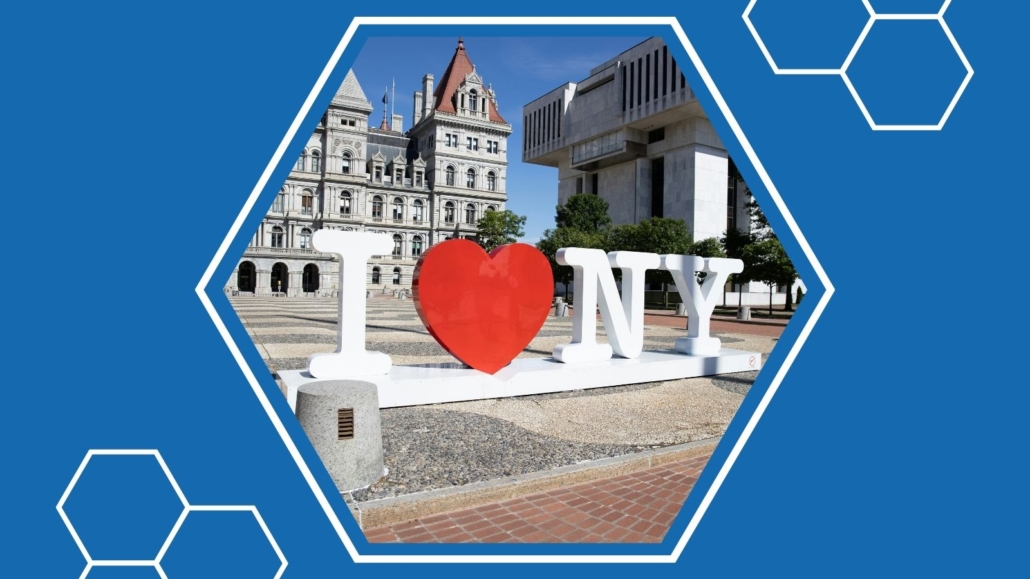
“I Love NY”
Launched in 1977, “I Love NY” remains one of the most recognized place brands globally. The Milton Glaser-designed logo achieved something remarkable: making emotional connection with a city feel universal and accessible.
But the campaign evolved significantly after 2010. Facing competition from other cities and managing Instagram-driven overcrowding at iconic locations, New York shifted messaging toward diverse neighborhood experiences. The “I Love NY” umbrella now encompasses upstate tourism and outer-borough exploration, spreading visitors beyond Manhattan’s most congested sites.
Results: The campaign has generated billions in tourism revenue over its lifetime and inspired countless imitators. Its longevity proves that strong city branding can endure for decades with thoughtful adaptation.
“I amsterdam”
Amsterdam’s “I amsterdam” campaign launched in 2004 and quickly became one of Europe’s most successful city brands. The physical letters in front of the Rijksmuseum became an Instagram sensation.
By 2018, however, the city removed the letters. Overtourism had become unsustainable, and residents felt the marketing attracted the wrong visitors. Amsterdam pivoted toward messaging that discouraged bachelor parties and budget tourism while welcoming visitors who respect local quality of life.
Lesson: Even highly successful campaigns may need fundamental rethinking when circumstances change. The best city marketers listen to residents and adjust accordingly.
Building City Brands That Work for People and for the Future
City marketing is a long-term effort that brings together economic development, communication, urban policy, and everyday life. The strongest cities attract visitors, talent, and investment while improving quality of life for residents. They invest in real improvements, communicate them with honesty, and measure success through reputation, engagement, economic impact, and resident satisfaction.
As cities look toward 2030, those that combine inclusive development with data informed digital marketing will be better placed to grow and compete. At SublimeStart, we help cities turn long-term strategies into strong digital experiences through SEO, clear messaging, user focused websites, and performance driven campaigns.
Strong city brands are built over time. If you want to strengthen your city’s digital presence and place brand, explore our place marketing services or get in touch with our team.